
 03
03
Stage 3 Management Skills
Foundations of Leadership
Practical leadership, communication, delegation and people-management skills for the modern workplace.
Foundations of Leadership
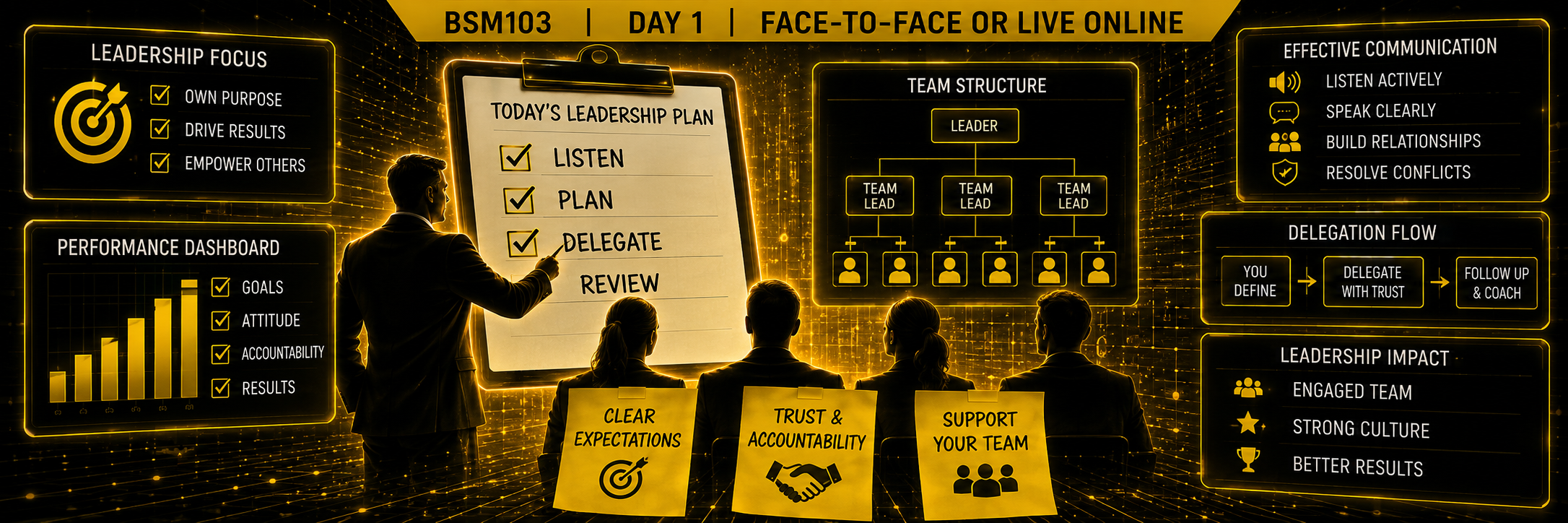
This practical one-day course is designed for anyone taking their first step into management or leadership, as well as experienced managers who want to refresh or strengthen their skills. Delegates learn how to move from being responsible for their own work to achieving results through other people, while building trust, setting expectations, communicating clearly and dealing with workplace challenges professionally.
Practical outcomeLeave with greater confidence and a clear set of techniques for communicating, delegating, motivating and managing people effectively.
Who Should Attend?
- Newly appointed team leaders
- First-time managers
- Supervisors
- Aspiring managers
- Employees preparing for a future leadership role
- Experienced managers who have never received formal management training
- Existing managers who want to refresh or strengthen their leadership skills
Benefits From Attending
- Understand the role, responsibilities and expectations of a manager
- Recognise the difference between managing work and leading people
- Achieve results through the effective management of others
- Adapt leadership styles to different people and situations
- Communicate more effectively using words, tone and body language
- Build trust while maintaining professional boundaries
- Delegate work clearly while retaining accountability
- Motivate individuals and improve team performance
- Address poor performance, lateness and workplace problems appropriately
- Understand what should remain confidential and what must be escalated
- Communicate professionally with employees and senior management
- Approach difficult conversations with greater confidence
What You Will Learn
14 practical modules
Course Contents
- The Role of a ManagerUnderstand core duties, responsibilities and expectations, and what changes when you become responsible for the work and performance of other people.
- Management and LeadershipExplore the difference between managing tasks and leading people, and understand why effective managers need both sets of skills.
- Moving from Colleague to ManagerManage former friends or colleagues while maintaining positive relationships, professional boundaries and appropriate authority.
- Leadership StylesIdentify different leadership styles and adapt your approach to suit individual employees, teams and workplace situations.
- Effective CommunicationImprove your use of words, tone of voice, body language, listening skills and questioning techniques.
- Managing UpwardsCommunicate with senior management, raise concerns professionally and work effectively with managers whose style may differ from your own.
- Confidentiality and TrustUnderstand what can be shared with the team, what should remain confidential and when a problem must be escalated.
- Delegation and AccountabilityDecide what to delegate, select the right person, explain the required outcome and monitor progress without micromanaging.
- Managing Performance and BehaviourUse practical approaches for poor performance, repeated lateness, missed deadlines, disagreements and difficult behaviour.
- Motivating Your TeamUnderstand different motivators and use objectives, recognition, feedback and support to improve performance.
- Building Effective TeamsEncourage trust, cooperation, accountability, shared responsibility and stronger team performance.
- Managing Priorities and ResourcesOrganise workloads, allocate resources, set priorities and ensure important work is completed.
- Problem-Solving and Decision-MakingUse structured techniques to evaluate workplace problems, consider options and make more confident decisions.
- Practical Scenarios and QuestionsDiscuss realistic management situations and possible approaches to challenges delegates may already be facing.
