 01
01
Essential Business Skills
Swimming in Quicksand
Practical techniques for managing workload, priorities, interruptions and the working day.
Time Management: Swimming in Quicksand
This practical one-day course is designed for anyone who feels there are never enough hours in the working day or who wants to become more organised, productive and confident in managing their responsibilities. Delegates will examine how they currently use their time, identify habits that may be holding them back and learn practical techniques for planning, prioritising, communicating and delegating more effectively.
Practical outcomeCreate a realistic personal action plan and begin taking greater control of workload, priorities and time.
Who Should Attend?
- Team leaders and supervisors
- Managers and aspiring managers
- Human resources professionals
- Project managers and coordinators
- Administrative and support staff
- Employees managing demanding or changing workloads
- Anyone who wants to improve their personal effectiveness
Benefits From Attending
- Understand your personal time-management style
- Recognise strengths and areas for development
- Distinguish between being busy and being productive
- Set clear, realistic and achievable objectives
- Prioritise important work rather than constantly reacting
- Plan time more effectively
- Identify and reduce common time-wasting activities
- Manage interruptions and distractions more confidently
- Improve focus, motivation and personal accountability
- Delegate appropriate tasks more effectively
- Communicate priorities, expectations and deadlines clearly
- Develop practical habits that support long-term improvement
What You Will Learn
12 practical modules
Course Contents
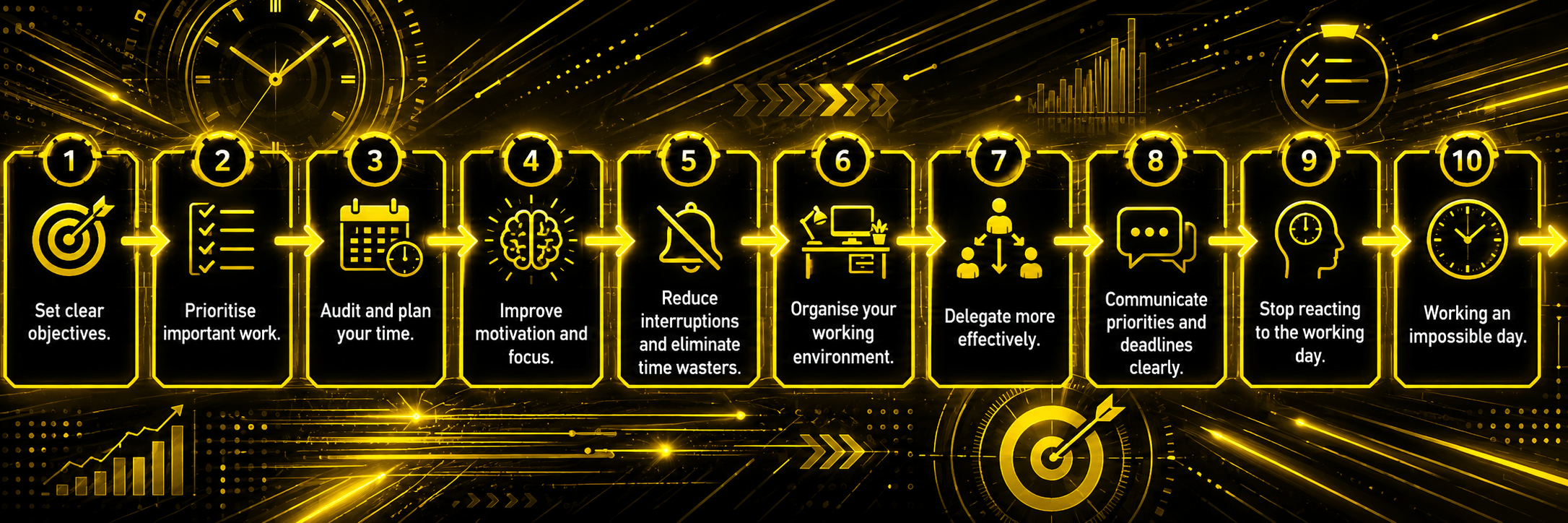
- Setting ObjectivesTurn responsibilities and ideas into clear, achievable objectives that provide direction, improve focus and make progress easier to measure.
- PrioritisationDistinguish between urgent and important work while managing immediate demands and continuing to progress longer-term goals.
- Time AuditingExamine how time is currently used and identify interruptions, repeated tasks, unnecessary activities and hidden time drains.
- Time PlanningPlan the day, week and longer-term workload, allocate time realistically and protect time for important work.
- Improving Work HabitsIdentify routines that create delays, disorganisation or unnecessary pressure and replace them with more effective ways of working.
- Motivation and FocusExplore techniques for beginning difficult tasks, maintaining momentum, improving concentration and avoiding procrastination.
- Eliminating Time WastersRecognise unnecessary meetings, excessive emails, poor preparation, unclear instructions and avoidable interruptions.
- Workspace OrganisationCreate a more organised physical and digital working environment that reduces wasted time and makes information easier to find.
- DelegationDecide what should be delegated, who it should be delegated to and how to provide clear instructions while creating development opportunities.
- Effective CommunicationReduce delays, duplicated work and avoidable mistakes by communicating priorities, responsibilities and deadlines more effectively.
- Self-ManagementTake greater responsibility for personal performance, decisions and working habits, and build confidence when managing competing demands.
- Creating a Personal Action PlanIdentify the changes you want to make and create a practical action plan that can be applied immediately in the workplace.
